Persian kuku sabzi with smoked trout, barberries and yuzu labneh
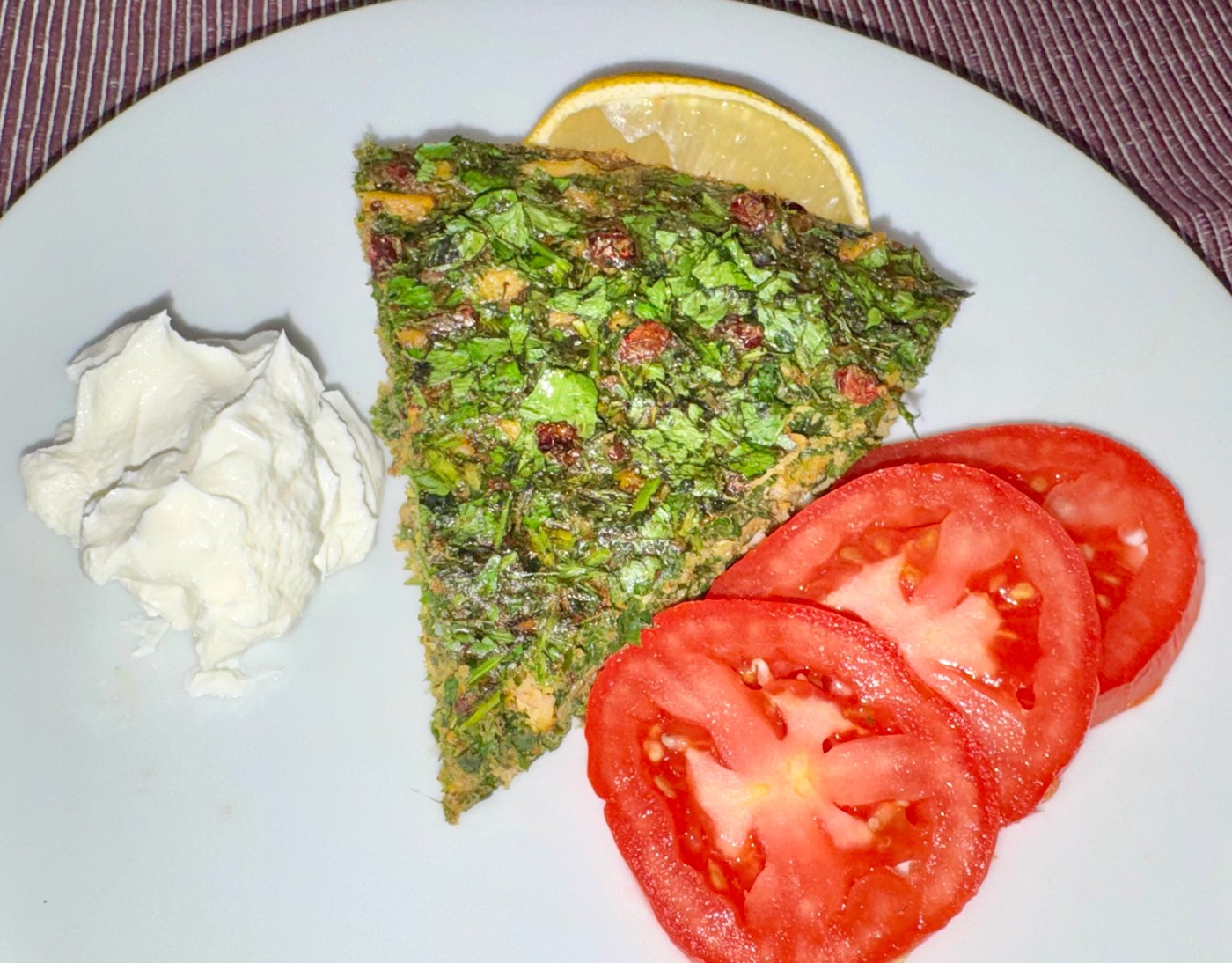
PERSIAN KUKU SABZI
Robert Meyers-Lussier
PREP 25 MIN | COOK 30 MIN | SERVES 4-6
Baked herb frittata with smoked trout, barberries, yuzu labneh drizzle, and furikake.
The Headnote
Kuku sabzi is an herb dish — not an egg dish with herbs in it, but an herb dish held together by egg. Iran has been making it this way for centuries and the ratio has not changed because it does not need to. This version takes that foundation somewhere new: doubled smoked trout for structural richness, a layered Persian spice profile, and a yuzu labneh drizzle with furikake that bridges Persian and Japanese in a way that earns its place on the plate.
Ingredients
The Batter
- 6 large eggs
- 1 tsp (5ml) maple syrup
- 3/4 tsp ground turmeric
- 1 tsp sumac
- 1/4 tsp ground cinnamon
- 1/4 tsp Aleppo pepper (or a pinch of cayenne)
- 1 tsp onion powder
- 1/2 tsp garlic powder
- 1/2 tsp baking powder
- 1/2 tsp kosher salt
- 1/4 tsp freshly ground black pepper
The Herbs and Mix-Ins
- 2 cups flat-leaf parsley leaves, tightly packed
- 1 cup fresh dill fronds, tightly packed
- 1/2 cup fresh cilantro leaves, tightly packed
- 1/4 cup fresh chives, roughly chopped
- 8 oz (225g) smoked trout, skin removed and flaked into rough pieces
- 3 tbsp dried barberries (Amazon — do not substitute dried cranberries)
For the Pan
- 1 1/2 tbsp (22ml) olive oil
Yuzu Labneh Drizzle
- 1/2 cup (120ml) plain labneh or strained whole-milk Greek yogurt
- 2 tbsp (30ml) yuzu juice, bottled (Kikkoman and Yakami Orchard are reliable)
- 2-4 tbsp (30-60ml) skim or 1% milk, to loosen
- 1/2 tsp Aleppo pepper
- Pinch of kosher salt
To Finish
- 3 Roma tomatoes, chopped — divided between plating on the wedge and serving on the side
- Pinch of kosher salt
- Classic furikake — approximately 1 tsp per wedge
Method
- Preheat the Oven
Turn the oven to 375 degrees F (190 degrees C) before doing anything else. It needs 12-15 minutes to come to temperature.
- Prep the Tomatoes
Chop 3 Roma tomatoes and place in a bowl. Toss with a pinch of salt and set aside to drain for at least 5 minutes. This pulls excess moisture out so they sit cleanly on the plate at service rather than weeping liquid onto the kuku.
- Make the Drizzle
Whisk together 1/2 cup (120ml) labneh, 2 tbsp (30ml) yuzu juice, 1/2 tsp Aleppo pepper, and a pinch of salt. Add 2-4 tbsp (30-60ml) milk a little at a time, whisking until the drizzle ribbons cleanly off a spoon. Set aside. Reserve a portion in a small cup for serving on the side.
- Chop the Herbs
Wash 2 cups parsley, 1 cup dill, 1/2 cup cilantro, and 1/4 cup chives and dry them thoroughly — spin them or press between kitchen towels. Wet herbs release steam in the oven and prevent the bottom from crisping. Chop all herbs together finely — not pulverized, but no large leaves remaining. Do not use a food processor; it bruises the herbs and releases too much moisture.
- Make the Batter
Beat 6 eggs in a large bowl until uniform. Beat in 1 tsp (5ml) maple syrup. Add 3/4 tsp turmeric, 1 tsp sumac, 1/4 tsp cinnamon, 1/4 tsp Aleppo pepper, 1 tsp onion powder, 1/2 tsp garlic powder, 1/2 tsp baking powder, 1/2 tsp salt, and 1/4 tsp black pepper and beat again until fully combined. Fold in the chopped herbs, 8 oz (225g) flaked smoked trout, and 3 tbsp dried barberries until everything is coated in egg. The mixture will look overwhelmingly green and barely held together — this is correct. Let it rest 5 minutes while the oven finishes preheating.
- Heat the Pan
Heat an 8 or 9-inch oven-safe skillet (cast iron or nonstick) over medium heat. Add 1 1/2 tbsp (22ml) olive oil and swirl to coat the bottom and sides. The oil should shimmer but not smoke.
- Start on the Stovetop
Pour the batter into the hot skillet and smooth the surface lightly with a spatula — do not press down. Pressing compresses air and works against the baking powder. Cook over medium heat for 4-5 minutes without stirring, until the edges are visibly set and pulling away from the sides. The center will still be wet.
- Finish in the Oven
Transfer the skillet to the oven and bake for 18-22 minutes until the center is fully set and a toothpick inserted in the middle comes out clean. The top should be matte and firm, not shiny or jiggly. The bottom, when lifted with a spatula, should be deep golden-brown — almost mahogany.
- Rest and Unmold
Let the kuku rest in the pan for 5 minutes. Run a flexible spatula around the edges to loosen it, then slide or invert onto a cutting board. Slice into wedges.
- Plate and Serve
Place each wedge on the plate. Spoon approximately 2 tbsp drained chopped Roma tomato directly on top of the wedge. Drizzle the yuzu labneh diagonally across the wedge and tomato in one confident pass. Scatter approximately 1 tsp classic furikake over the drizzle. Serve with additional chopped tomato on the side and a small cup of yuzu labneh drizzle alongside so the diner can add more of both as they go.
Serve With
Warm flatbread (lavash or pita) to tear and use as a vehicle. Brewed black tea served with a small bowl of sugar on the side, the traditional Persian way. The yuzu labneh drizzle carries the brightness — no lemon needed at the table.
High-Altitude Adjustments (~5,900 ft)
- The 1/2 tsp baking powder called for here is low enough that no adjustment is needed at this elevation.
- Check the kuku at 18 minutes rather than 22 — ovens run slightly hotter and drier at altitude and the center may set faster than at sea level.
Chef's Notes (Read Before You Cook)
- Eight ounces of smoked trout is a structural presence, not a garnish. Every bite should carry the richness of the trout alongside the brightness of the herbs. Do not reduce it.
- Do not substitute dried cranberries for barberries. Cranberries are too sweet and will pull the dish in the wrong direction.
- Scatter the furikake over the drizzle at the last moment — it loses its crunch within minutes once it contacts moisture.
- The onion and garlic powder amounts are assertive by design. They have to hold up against four cups of packed herbs and eight ounces of smoked trout. Do not reduce them.
- The maple syrup stands in for dried fenugreek leaves, the most traditional kuku sabzi addition. At 1 tsp it contributes aromatic warmth without any detectable sweetness. If you find kasuri methi, add 1 tbsp chopped into the batter in Step 5 and reduce the maple syrup to 1/2 tsp.
- GLP-1 portion guidance: one or two wedges with the yuzu labneh drizzle is a complete breakfast. The doubled smoked trout and eggs provide substantial protein per serving. The drizzle uses milk rather than olive oil to keep the fat profile tight.
Make-Ahead and Leftovers
- Make the yuzu labneh drizzle up to 24 hours ahead and refrigerate covered. Whisk briefly before serving.
- The kuku keeps refrigerated for up to 3 days. Serve at room temperature or warm briefly in a low oven. Do not microwave — it makes the eggs rubbery.
- Do not top with tomatoes, drizzle, or furikake until service. All three are added fresh to each serving.
Robert Meyers-Lussier
New to These Ingredients and Techniques?
- Kuku sabzi: A Persian baked herb cake, more herb than egg. It is not a frittata, though it is often described that way. The herb-to-egg ratio is inverted from what most Western cooks expect — the egg is the binder, not the main ingredient.
- Sumac: A deep burgundy-red ground spice with a bright, lemony tartness. Made from dried sumac berries. Widely available in the spice aisle at most grocery stores and Middle Eastern markets.
- Aleppo pepper: A mildly hot, fruity dried chili from Syria with a slow, warm heat and a slight oiliness. Less sharp than cayenne. Available at Middle Eastern markets, Whole Foods, and online. Pinch of cayenne is the backup substitute.
- Barberries: Small, jewel-red Persian dried berries with a sharp, clean tartness and no sweetness. They soften and mellow when baked into the kuku. Sold on Amazon and at Middle Eastern or Persian grocery stores. Do not substitute dried cranberries — too sweet.
- Labneh: Strained yogurt with the consistency of soft cream cheese and a clean, tangy flavor. Available at Middle Eastern markets, Whole Foods, and many large grocery stores. Strained whole-milk Greek yogurt is a reliable substitute.
- Yuzu juice: Juice from a Japanese citrus fruit with a floral, perfumed quality unlike lemon or lime. Bottled yuzu juice is sold at Asian markets, Whole Foods, and online. Do not substitute lemon — the flavor profile is different enough to matter here.
- Furikake: A Japanese seasoning blend of sesame seeds, nori (dried seaweed) flakes, salt, and sugar. It adds crunch, a subtle oceanic note, and visual contrast. Use classic furikake, not flavored varieties. Available at Asian markets and most large grocery stores.
- Kasuri methi (optional): Dried fenugreek leaves with a slightly bitter, maple-adjacent aroma. The traditional herb in kuku sabzi that this recipe approximates with maple syrup. If you find it, add 1 tbsp to the batter and reduce the maple syrup to 1/2 tsp. Available at Indian grocery stores. Rani Brand and Aiva are reliable.
- Stovetop-to-oven technique: Starting the kuku on the stovetop sets the bottom crust and creates the deep golden color, then the oven finishes cooking the center without burning the bottom. An oven-safe skillet — cast iron or nonstick with an oven-safe handle — is required for this method.