Miso-pine salmon breakfast bowl
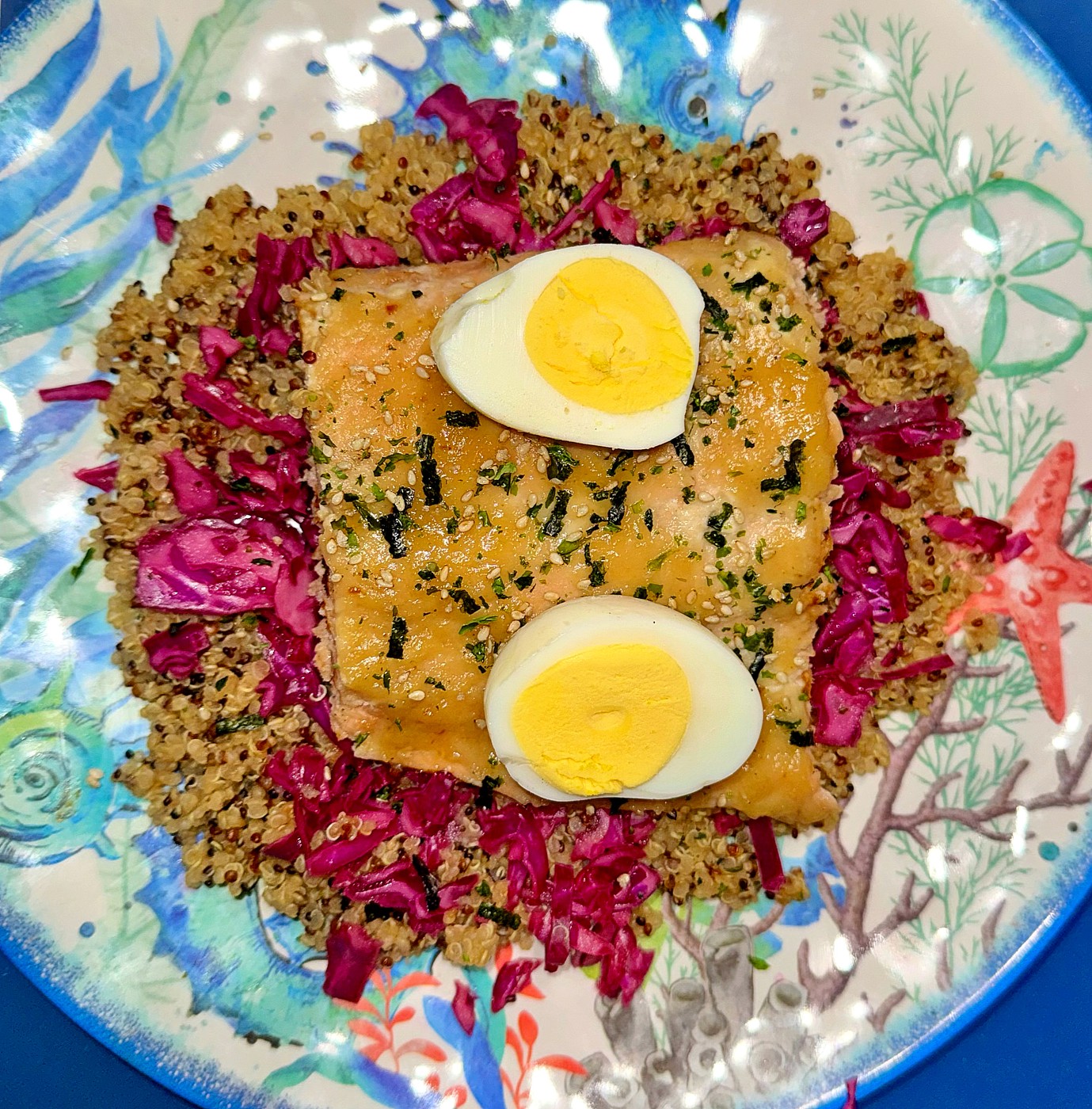
MISO-PINE SALMON BREAKFAST BOWL
WITH QUICK PICKLED CABBAGE, JAMMY EGG, AND FURIKAKE FINISH
Robert Meyers-Lussier
Nordic forest meets Japanese umami: salmon lacquered with a miso-pine glaze, set over anise-scented quinoa, topped with juniper-kissed pickled cabbage.
PREP 15 MIN | COOK 20 MIN | SERVES 2 | PAN: SHEET PAN + SAUCEPAN
The Headnote
Furikake adds a final savory crunch. Protein-forward, controlled carbs, bright finish.
Ingredients
Salmon
- 2 salmon fillets (4 oz / 115 g each)
- 1 tablespoon white miso
- 1 tablespoon pine syrup (or 1½ tsp pine + 1½ tsp maple)
- 1 teaspoon rice vinegar
- 1 teaspoon neutral oil
- ½ teaspoon freshly grated ginger (or pinch yuzu zest)
- Pinch kosher salt
- Optional: pinch mild chili powder or Aleppo pepper
Quinoa Base
- ½ cup (90 g) quinoa, rinsed
- 1 cup (240 ml) water
- ¼ teaspoon kosher salt
- Tiny pinch (⅛ tsp max) ground anise
Quick Pickled Cabbage
- 2 cups (120 g) shredded red cabbage
- 2 tablespoons rice vinegar
- 1 tablespoon fresh lime juice
- ¼ teaspoon kosher salt
- 2-3 crushed juniper berries (or pinch dill seed / tiny pinch ground allspice)
- Optional: 1 teaspoon pine syrup, for softer pickle
Eggs + Finish
- 2 large eggs
- 1 teaspoon toasted sesame oil
- 1 tablespoon toasted sesame seeds
- 2 tablespoons thinly sliced scallions
- 1 teaspoon furikake (salmon, wasabi, or classic)
- Lime wedges, for serving
Method
- Cook the quinoa.
Combine ½ cup (90 g) quinoa, 1 cup (240 ml) water, ¼ teaspoon kosher salt, and ⅛ teaspoon ground anise. Bring to a boil, cover, reduce to low, cook 15 minutes. Rest 5 minutes, then fluff.
- Quick-pickle the cabbage.
Massage cabbage with salt for 60 seconds. Add vinegar, lime juice, and crushed juniper berries. Toss. Let stand.
- Roast the salmon.
Heat oven to 425°F. Whisk miso, pine syrup, rice vinegar, oil, and ginger to form a glaze. Season salmon with salt, brush with half the glaze, roast 8-10 minutes. Brush with remaining glaze in the last 2 minutes to prevent over-caramelization.
- MAKE HARD-BOILED EGGS.
Simmer eggs 10-12 minutes, chill in cold water, peel, and halve.
- Assemble and finish.
Divide quinoa between bowls. Top with cabbage (drained), salmon, and egg. Drizzle with sesame oil, then finish with sesame seeds, scallions, and furikake. Serve with lime wedges.
High-Altitude Adjustments (~5,900 ft)
- Quinoa: water boils at approximately 203°F at this elevation. If grains are not fully tender at the 15-minute mark, add 1-2 minutes covered before resting.
- Eggs: simmer temperature is lower at altitude; add 1-2 minutes to the 10-12 minute time to ensure a fully set yolk.
- Oven roasting is unaffected; the 425°F setting remains correct.
Chef's Notes (Read Before You Cook)
- Glaze is scaled to properly coat two 4 oz fillets.
- Pine syrup caramelizes faster than maple; watch closely during the final 2 minutes.
- Crush juniper berries lightly to release aroma without pulverizing.
- Ground anise is potent; the tiny pinch bridges Nordic and Japanese without dominating either tradition.
Serving & Pairings
- Fresh orange slices or berries on the side.
- Hot green tea or black coffee.
- Cucumber slices with salt for extra crunch.
Make-Ahead & Leftovers
- Quinoa keeps 4 days; rewarm with a splash of water.
- Pickled cabbage keeps 3 days; drain before using.
- Salmon is best fresh, but excellent chilled over the bowl the next day.
Unfamiliar Ingredients & Techniques
If something in this recipe made you pause, here is what it is and why it is here.
Ingredients
Pine syrup. A sweetener made from pine needles or pine buds, with a resinous, faintly mentholated quality that reads as "forest" rather than "sweet." It bridges Scandinavian and Japanese flavor sensibilities in this glaze in a way maple cannot. If you cannot find it, the recipe offers a substitute: half pine extract, half maple syrup.
Furikake. A Japanese rice seasoning blend typically made from dried fish, toasted sesame seeds, nori (seaweed), salt, and a touch of sugar. It delivers umami, crunch, and a savory finish in a single pinch. Look for it in the Asian foods aisle or at any Japanese grocery. Salmon, wasabi, and classic varieties all work here.
White miso. Miso is a fermented soybean paste. White miso (shiro miso) is the mildest and sweetest variety, fermented for the shortest time. It adds savory depth without the intensity of red or dark miso. It is the right choice here because the pine syrup already carries a strong flavor profile; white miso amplifies without overpowering.
Juniper berries. The same small, dried berries that give gin its distinctive aroma. In cooking, they contribute a piney, faintly citrusy note. Used whole and lightly crushed, they perfume the pickle without making it taste like a cocktail. If unavailable, a pinch of dill seed or a tiny pinch of ground allspice provides a similar aromatic function.
Aleppo pepper. A Syrian and Turkish dried chili with moderate heat, a fruity richness, and a slight oiliness. It warms without burning and adds complexity where plain chili powder would be blunt. Optional in this recipe, but worth keeping in the pantry. A pinch of smoked paprika plus a pinch of cayenne approximates it in a pinch.
Yuzu zest. Yuzu is a Japanese citrus fruit with a floral, tart aroma that sits somewhere between lemon and grapefruit with a hint of mandarin. The zest is listed here as an optional swap for fresh ginger. It is increasingly available in specialty grocery stores; frozen yuzu zest is also widely sold online.
Rice vinegar. Made from fermented rice, rice vinegar is milder and less sharp than distilled white vinegar or apple cider vinegar. It contributes acidity without an aggressive bite, which matters here in both the glaze and the quick pickle. Do not substitute with white vinegar one-for-one; use slightly less and taste as you go.
Techniques
Salt massage for quick pickling. Working salt into raw cabbage by hand for about 60 seconds draws moisture out of the cells and softens the texture without heat. The result is a crisper, more pliable pickle than you get from simply soaking. This is the same principle used in Japanese tsukemono. Do not skip it; the texture difference is significant.
Lacquering. Applying glaze in two stages during roasting rather than all at once. The first coat goes on before the fish enters the oven and sets into the surface during the initial cooking. The second coat goes on in the last two minutes, where the heat caramelizes it into a shiny, concentrated layer. A single heavy coat applied at the start would either burn or slide off. Two thin coats build depth.
Robert Meyers-Lussier